| Επιστ. Υπεύθυνος |
|
|---|---|
| Συμμετέχοντα Μέλη ΔΕΠ |
|
| Τίτλος | Hellenic Chips Competence Centre (HCCC) |
| Φορέας Χρηματοδότησης | Το HCCC υποστηρίζεται από το Chips JU και τα μέλη του, και συγχρηματοδοτείται από την Ευρωπαϊκή Ένωση και την Ελληνική Κυβέρνηση μέσω του προγράμματος “Ανταγωνιστικότητα” |
| Προϋπολογισμός | 326.350,00 |
| Διάρκεια | 01/06/2025 – 31/05/2029 |
| Ιστοσελίδα | http://www.hccc.org.gr/ |
| Επιστ. Υπεύθυνος |
|
|---|---|
| Τίτλος | Αναλογικός Σχεδιασμός, Δοκιμές και Επαλήθευση |
| Φορέας Χρηματοδότησης | NanoZeta Technologies ltd. |
| Προϋπολογισμός | 271.400,00 |
| Διάρκεια | 26/01/2021 – 25/01/2028 |
| Επιστ. Υπεύθυνος |
|
|---|---|
| Τίτλος | DIGITAfrica: Towards a comprehensive pan-African research infrastructure in Digital Sciences |
| Φορέας Χρηματοδότησης | ΕΥΡΩΠΑΪΚΗ ΕΝΩΣΗ |
| Προϋπολογισμός | 123.125,00 |
| Διάρκεια | 16/12/2024 – 31/12/2027 |

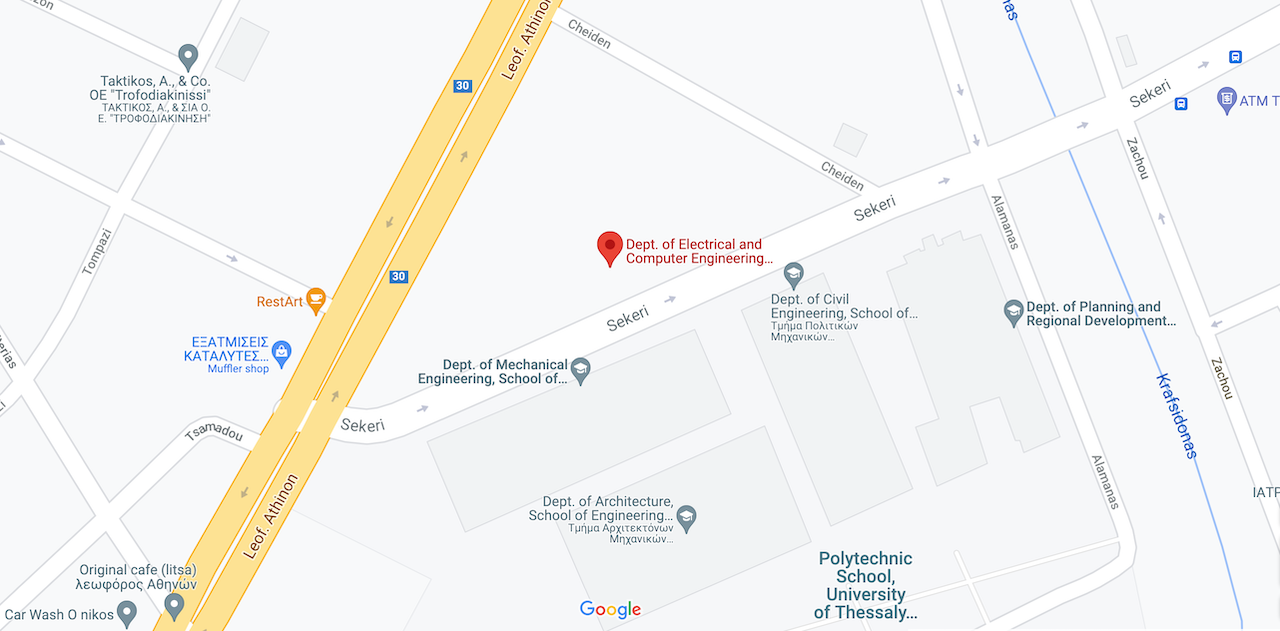
| Τμήμα Ηλεκτρολόγων Μηχανικών & Μηχανικών Υπολογιστών | |
|---|---|
| |
| Τηλ. | +30 24210 74967, +30 24210 74934 |
| gece ΑΤ uth.gr | |
| Τηλ. Π.Μ.Σ. | +30 24210 74933 |
| e-mail Π.Μ.Σ. | pgsec ΑΤ uth.gr |
| Ιστοσελίδα | https://www.e-ce.uth.gr/contact-info/ |
Η εταιρεία Qubber – Machine Vision Technology, με έδρα το Βόλο, ζητεί να προσλάβει έναν Ηλεκτρολόγο Μηχανικό με τα εξής προσόντα:
• Απόφοιτος ΑΕΙ Ηλεκτρολόγων Μηχανικών και Μηχανικών Υπολογιστών.
• Γνώσεις σε προγραμματισμό C#, Visual Basic, βάσεις δεδομένων.
• Άριστη γνώση Η/Υ.
• Πολύ καλή γνώση Αγγλικών.
• Στρατιωτικές υποχρεώσεις εκπληρωμένες.
• Ικανότητα στην οργάνωση και με πνεύμα συνεργασίας.
Αποστολή βιογραφικών στο: sbekos@qubber.gr
Τα τελευταία χρόνια οι αυξημένες απαιτήσεις που παρουσιάζουν τα συστήματα απόκτησης, καταγραφής και επεξεργασίας δεδομένων σε εργαστηριακό, ερευνητικό και βιομηχανικό επίπεδο οδήγησαν στην ανάπτυξη υλικού και λογισμικού που υπερβαίνουν σημαντικά τις δυνατότητες των παραδοσιακών συστημάτων που χρησιμοποιούνταν μέχρι σήμερα για το σκοπό αυτό. Η δυναμική εξέλιξη των λογισμικών πακέτων επεξεργασίας, ανάλυσης και απεικόνισης δεδομένων οδήγησε στην ανάπτυξη και διάδοση των “Eικονικών Oργάνων” (Virtual Instruments) έτσι ώστε να καταστεί εφικτή η απεικόνιση των μετρήσεων και ο έλεγχος των συστημάτων σε πραγματικό χρόνο. Πλεονέκτημα των εικονικών οργάνων είναι η μειωμένη δαπάνη συντήρησης των συστημάτων, καθώς και η άμεση τροποποίηση, επέκταση και προσαρμογή τους κάτω από τις νέες απαιτήσεις των σύγχρονων εργαστηριακών και ερευνητικών εφαρμογών.
Στα πλαίσια αυτά το Τμήμα Ηλεκτρολόγων Μηχανικών και Μηχανικών Υπολογιστών του Πανεπιστημίου Θεσσαλίας, σε συνεργασία με την Epsilon Metrix (επίσημη αντιπρόσωπο για την Ελλάδα της National Instruments), διοργανώνει ημερίδα με θέμα τα “Εικονικά Όργανα”. Ο συνδυασμός παρουσιάσεων και πρακτικών μετρητικών ασκήσεων που θα διεξαχθούν, θα βοηθήσει τους φοιτητές του Τμήματος να εξοικειωθούν με σύγχρονα θέματα μετρήσεων και ελέγχου μέσω μονάδων προγραμματισμού συλλογής δεδομένων σε πραγματικό χρόνο, καθώς και να γνωρίσουν στην πράξη την υλοποίηση ολοκληρωμένων εφαρμογών μέτρησης και αυτοματισμού μέσω του γραφικού συστήματος προγραμματισμού NI LabVIEW.
MicroRNAs (miRNAs) are non-coding RNAs, which regulates expression of protein-coding genes. MiRNA expression signatures can distinguish cancer subtypes or predict biological and clinical behavior within the same cancer type. The understanding of miRNA function is likely to lead to novel therapeutically treatment of cancer and other diseases.
Next-generation sequencing ( NGS) refers to non-Sanger-based high-throughput DNA sequencing technologies. Millions or billions of DNA strands can be sequenced in parallel, yielding substantially more throughput and producing Terabyte of data in one run. few hours.
The talk will address current status of computational approaches for the identification of miRNAs function in light of NGS technology. The use of machine learning algorithms for the identification of miRNA function and the encryption of regulatory gene networks will be described and open questions in the field will be discussed.
The virtual space created through the use of information and communication technologies (ICTs) overlays more and more closely the physical space of cities, contributing in the formation of a new hybrid space. Our ambitious goal is to provide concrete tools (analytical, conceptual, and practical) that will allow citizens to make informed design choices and shape the hybrid urban space according to their own needs, values and objectives (http://nethood.org).
For that, in this talk we provide a short parallel introduction to the fields of computer science and urban planning seen as the two highly multidisciplinary scientific domains that are responsible for the design of the virtual and the physical space respectively. We draw analogies between the vocabulary, methodologies and ways of reasoning, and argue for the need to converge these mostly separate until today streams of research, to closely collaborate over the design principles that will guide the evolution of hybrid cities.
In the second part of the talk, we give a concrete example on how such collaborations can be instantiated. Our case study explors the possibilities offered by wireless technology to citizens to deploy local wireless networks outside the public Internet, which can grant easy access for everyone, allow to choose the desired level of anonymity and privacy, and compete with global corporations such as Google and Facebook for the “right to the hybrid city”. We review existing initiatives around the world and identify important design details that matter both in the virtual and in the physical space. In context, we discuss our experiences from a recent interdisciplinary Dagstuhl seminar on Do It-Yourself Networking (http://www.dagstuhl.de/14042/) with participants from various fields of research and action, including networking, security, community informatics, Human-Computer-Interaction, arts and design, community wireless networks, and more.
We will conclude with an open discussion about the organization of such interdisciplinary gatherings (seminars, workshops, summer schools, hackathons, etc.) around the design of concrete solutions for specific cities, starting with the city Volos and an upcoming summer school, organized by the Departement of Informatics at University of Thessaly (http://www.internet-science.eu/summer-school-2014). The goal is to explore technologies that allow citizens to appropriate important aspects of their everyday life in the city (i.e., information, urban design, communication networks, and the economy) and engage students to work closely together with experts for sketching specific solutions for the city of Volos. This setup will hopefully open windows for interesting collaborations between urban planners and computer scientists during the summer school and in the future
We consider several challenging problems in complex networks; communication, social and hybrid. We use greedy hyperbolic embedding of such networks in hyperbolic space and the associated greedy routing that this embedding enables. We consider the following problems where this embedding provides high performance and efficient solutions. First, we develop greedy backpressure routing algorithms for both static and dynamic wireless networks that result in much better, and even controllable, trade-off between throughput and delay. The solution involves a new combination of greedy hyperbolic routing and backpressure scheduling. Second, we develop a context-aware routing scheme for social networks that aims to increase the relevance of messages shared across a social network. It achieves this by forwarding each message to the most relevant nodes, taking into account both user preferences and the network structure. Again greedy hyperbolic embedding is utilized and a new relevance metric is constructed that incorporates a context similarity measure and network structure, the latter represented by the hyperbolic distance between nodes. Third, we consider the advertisement allocation problem for large social networks. We show how hyperbolic embedding can be utilized again to formulate the underlying optimization problem in a continuum that not only reduces dramatically the dimensionality of the advertisement allocation problem from that of the associated integer programming formulation, but also provides a general framework for designing allocation strategies incorporating business rules. Fourth, we consider network tomography problems, whereby properties of internal nodes and links of the network are dynamically inferred from iterated adaptive measurements on a subset of nodes, called boundary nodes. Again using hyperbolic embedding we demonstrate that these tomography problems can be formulated as true tomography problems in hyperbolic space, involving inversion of Radon transforms on symmetric spaces; the tomographic “integrals” are now over paths of the graph.
Η ομάδα του εργαστηρίου Ηλεκτρονικής (http://vedalab.inf.uth.gr/index.php) του Τμήματος Ηλεκτρολόγων Μηχανικών και Μηχανικών Υπολογιστών του Π.Θ. που αποτελείται από τους Χαράλαμπο Αντωνιάδη, Παναγιώτη-Ταξιάρχη Γιαννακού, Χρήστο Καλονάκη, Δήμο Ντιούδη σε συνεργασία με τον απόφοιτο του Τμήματος και πλέον μεταπτυχιακό φοιτητή στο ΤU Delft Γεώργιο Πινήτα, προκρίθηκαν στους τρεις φιναλίστ του διαγωνισμού CAD αλγορίθμων που διοργανώνεται στα πλαίσια του TAU workshop (http://www.tauworkshop.com/). Η τελική θέση θα ανακοινωθεί κατά την διάρκεια του συνεδρίου που θα διοργανωθεί στην Santa Cruz, CA στις 6-7 Μαρτίου. Αξίζει να σημειωθεί ότι είναι η πρώτη φορά που ευρωπαϊκό πανεπιστήμιο βρίσκεται στους τρεις πρώτους.
To TAU workshop συγκεντρώνει το έντονο ενδιαφέρον της βιομηχανίας του EDA (Electronic Design Automation), με εταιρίες όπως την Intel, IBM, TI, AMD, Cadence, Synopsys και είναι το κορυφαίο workshop στον τομέα αυτό. Ο διαγωνισμός έχει θέμα την ανάπτυξη λύσεων για κάποιο συγκεκριμένο πρόβλημα της περιοχής της ανάλυσης χρονισμού (timing analysis) και συμμετέχουν ομάδες από πολύ γνωστά πανεπιστήμια από όλο τον κόσμο.
Συνημμένη θα βρείτε την προκήρυξη του Προγράμματος Μεταπτυχιακών Σπουδών του Τμήματος Ηλεκτρολόγων Μηχανικών και Μηχανικών Υπολογιστών, για το εαρινό εξάμηνο ακαδημαϊκού έτους 2013-2014.
Πρόσκληση Εκδήλωσης Ενδιαφέροντος Εαρινού Εξαμήνου 2013-2014
Εκ της Γραμματείας του Π.Μ.Σ.
Κατόπιν ενημέρωσης από τη Διεύθυνση Σπουδών και Φοιτητικής Μέριμνας του Υπουργείου Παιδείας και Θρησκευμάτων η διεξαγωγή των κατατακτηρίων εξετάσεων δεν θα πραγματοποιηθεί στις ανακοινωθείσες ημερομηνίες, καθώς έχει ψηφισθεί τροπολογία και εντός των ημερών θα δημοσιευθεί σε ΦΕΚ.
Μετά την κοινοποίηση του ΦΕΚ θα επανέλθουμε με νέα ανακοίνωση.