Department of Electrical and Computer Engineering

MENUMENU
  • Department
      • Profile
      • Faculty
      • Evaluation
      • Administration
      • Staff
  • Studies
    • Subject Areas
    • Undergraduate Studies
    • Postgraduate Studies
      • MSc Studies in “Science and Technology of ECE”
      • MSc Studies in “Smart Grid Energy Systems”
      • MSc Studies in “Applied Informatics”
    • PhD Studies
    • Course List
      • Undergraduate Courses
      • Postgraduate Courses
        • Science and Technology of ECE
        • Smart Grid Energy Systems
        • Applied Informatics
      • Erasmus
    • ECTS
    • Career Opportunities
    • Practice Training
  • Research
    • Labs
    • Research Projects
    • Postdoc Research
    • Ph.D. Candidates
    • Theses – Technical Reports
    • Active Research Projects

      Hellenic Chips Competence Centre (HCCC)

      Scientific ResponsibleStamoulis GeorgiosStamoulis Georgios, Professor
      E-mail: georges@uth.gr
      TitleHellenic Chips Competence Centre (HCCC)
      Funding AgencyΤο HCCC υποστηρίζεται από το Chips JU και τα μέλη του, και συγχρηματοδοτείται από την Ευρωπαϊκή Ένωση και την Ελληνική Κυβέρνηση μέσω του προγράμματος “Ανταγωνιστικότητα”
      Budget326.350,00
      Duration01/06/2025 – 31/05/2029

      Αναλογικός Σχεδιασμός, Δοκιμές και Επαλήθευση

      Scientific ResponsiblePlessas FotiosPlessas Fotios, Professor
      E-mail: fplessas@uth.gr
      TitleΑναλογικός Σχεδιασμός, Δοκιμές και Επαλήθευση
      Funding AgencyNanoZeta Technologies ltd.
      Budget271.400,00
      Duration26/01/2021 – 25/01/2028

      DIGITAfrica: Towards a comprehensive pan-African research infrastructure in Digital Sciences

      Scientific ResponsibleKorakis AthanasiosKorakis Athanasios, Professor
      E-mail: korakis@uth.gr
      TitleDIGITAfrica: Towards a comprehensive pan-African research infrastructure in Digital Sciences
      Funding AgencyΕΥΡΩΠΑΪΚΗ ΕΝΩΣΗ
      Budget123.125,00
      Duration16/12/2024 – 31/12/2027

      List of Research Projects →

  • Alumni
    • Ph.D. Graduates
  • Service Offices
    • Secretariat
    • Technical support
  • Announcements
    • General Announcements
    • Academic News
  • Contact
    • Department of Electrical and Computer Engineering
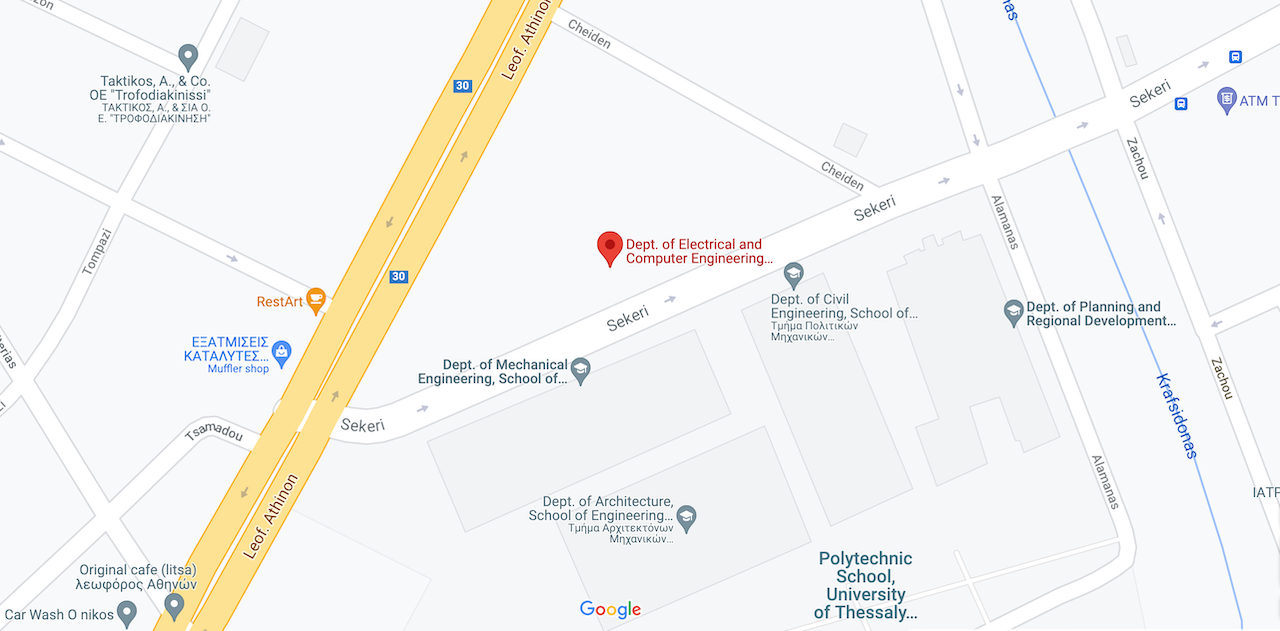
      • Sekeri – Cheiden Str
        Pedion Areos, ECE Building
        383 34 Volos – Greece
      Tel.+30 24210 74967, +30 24210 74934
      e-mailgece ΑΤ uth.gr
      PGS Tel.+30 24210 74933
      PGS e-mailpgsec ΑΤ uth.gr
      URLhttps://www.e-ce.uth.gr/contact-info/?lang=en
  • Login

ECE468 Networks and Information Systems Security

Home » Studies » Undergraduate Studies » Undergraduate Courses » ECE468 Networks and Information Systems Security
Subject AreaSignals, Communications, and Networking
SemesterSemester 8 – Spring
TypeElective
Teaching Hours4
ECTS6
Prerequisites
  • ECE318 Operating Systems
  • ECE313 Computer Networks I
Course Sitehttps://eclass.uth.gr/courses/E-CE_U_331
Course Director

Ioannis MountanosIoannis Mountanos, Associate Professor
E-mail: jmoondan@uth.gr

  • Description
  • Learning Outcomes

The main course topics are the following:

  • Introduction to network and information systems security
  • Attacks to software through stack exploitation
  • Attacks to software through heap exploitation
  • Attacks to software – Other vulnerabilities (format strings, off by one, numerical overflow, type conversions, frame pointer overwrite, fuzzing, reverse engineering, return oriented programming, return to libc)
  • Attack prevention in software (Νo execute bit / Data Execution Protection, Stack Canaries, Address Space Layout Randomization)
  • Isolation / confinement
  • Principles of secure software systems design
  • Elements of cryptography
  • Applications of cryptography
  • Web browser security
  • Web server / web application security (SQL injection, Cross-site Request Forgery, Cross-site Scripting)
  • Botnets
  • Distributed denial of service (DDoS) attacks
  • Firewalls
  • Intrusion detection / prevention systems (IDS / IPS)
  • Mobile systems security / Android

The course is complemented by a series of homeworks that allow the students to apply in practice the methods and techniques discussed in class.

After successfully fulfilling the requirements of the course, students:

  • Can identify the main vulnerabilities at the software, hardware, network and full system level.
  • Appreciate the mechanisms which allow seemingly benign bugs and caveats during the design and implementation of information systems to turn into exploitable vulnerabilities.
  • Know and can apply common attacks (traditional and recent) which exploit the aforementioned vulnerabilities.
  • Know and can apply countermeasures against those attacks / vulnerabilities.
  • Can design secure systems following best practice.
  • Can analyze the behavior of the system using scientifically acceptable methodologies and report their findings.

e-Yπηρεσίες

Contact Info

  • Sekeri – Cheiden Str, Pedion Areos, Volos
  • +30 24210 74967
  • +30 24210 74934
  • Email: gece@uth.gr

Announcements

  • Academic News

Find us

  • Facebook
  • Twitter
  • Youtube
  • Linkedin
© Copyright 2025 Department of Electrical and Computer Engineering
We use cookies to ensure that we give you the best experience on our website.OKΠληροφορίες