Department of Electrical and Computer Engineering
  • |
  • EN
  • GR
  • Department
      • Profile
      • Faculty
      • Evaluation
      • Administration
      • Staff
  • Studies
    • Subject Areas
    • Undergraduate Studies
    • Postgraduate Studies
      • MSc Studies in “Science and Technology of ECE”
      • MSc Studies in “Smart Grid Energy Systems”
      • MSc Studies in “Applied Informatics”
    • PhD Studies
    • Course List
      • Undergraduate Courses
      • Postgraduate Courses
        • Science and Technology of ECE
        • Smart Grid Energy Systems
        • Applied Informatics
      • Erasmus
    • ECTS
    • Career Opportunities
    • Practice Training
  • Research
    • Labs
    • Research Projects
    • Postdoc Research
    • Ph.D. Candidates
    • Theses – Technical Reports
    • Active Research Projects

      Hellenic Chips Competence Centre (HCCC)

      Scientific ResponsibleStamoulis GeorgiosStamoulis Georgios, Professor
      E-mail: georges@uth.gr
      TitleHellenic Chips Competence Centre (HCCC)
      Funding AgencyΤο HCCC υποστηρίζεται από το Chips JU και τα μέλη του, και συγχρηματοδοτείται από την Ευρωπαϊκή Ένωση και την Ελληνική Κυβέρνηση μέσω του προγράμματος “Ανταγωνιστικότητα”
      Budget326.350,00
      Duration01/06/2025 – 31/05/2029

      Αναλογικός Σχεδιασμός, Δοκιμές και Επαλήθευση

      Scientific ResponsiblePlessas FotiosPlessas Fotios, Professor
      E-mail: fplessas@uth.gr
      TitleΑναλογικός Σχεδιασμός, Δοκιμές και Επαλήθευση
      Funding AgencyNanoZeta Technologies ltd.
      Budget271.400,00
      Duration26/01/2021 – 25/01/2028

      DIGITAfrica: Towards a comprehensive pan-African research infrastructure in Digital Sciences

      Scientific ResponsibleKorakis AthanasiosKorakis Athanasios, Professor
      E-mail: korakis@uth.gr
      TitleDIGITAfrica: Towards a comprehensive pan-African research infrastructure in Digital Sciences
      Funding AgencyΕΥΡΩΠΑΪΚΗ ΕΝΩΣΗ
      Budget123.125,00
      Duration16/12/2024 – 31/12/2027

      List of Research Projects →

  • Alumni
    • Ph.D. Graduates
  • Service Offices
    • Secretariat
    • Technical support
  • Announcements
    • General Announcements
    • Academic News
  • Contact
    • Department of Electrical and Computer Engineering
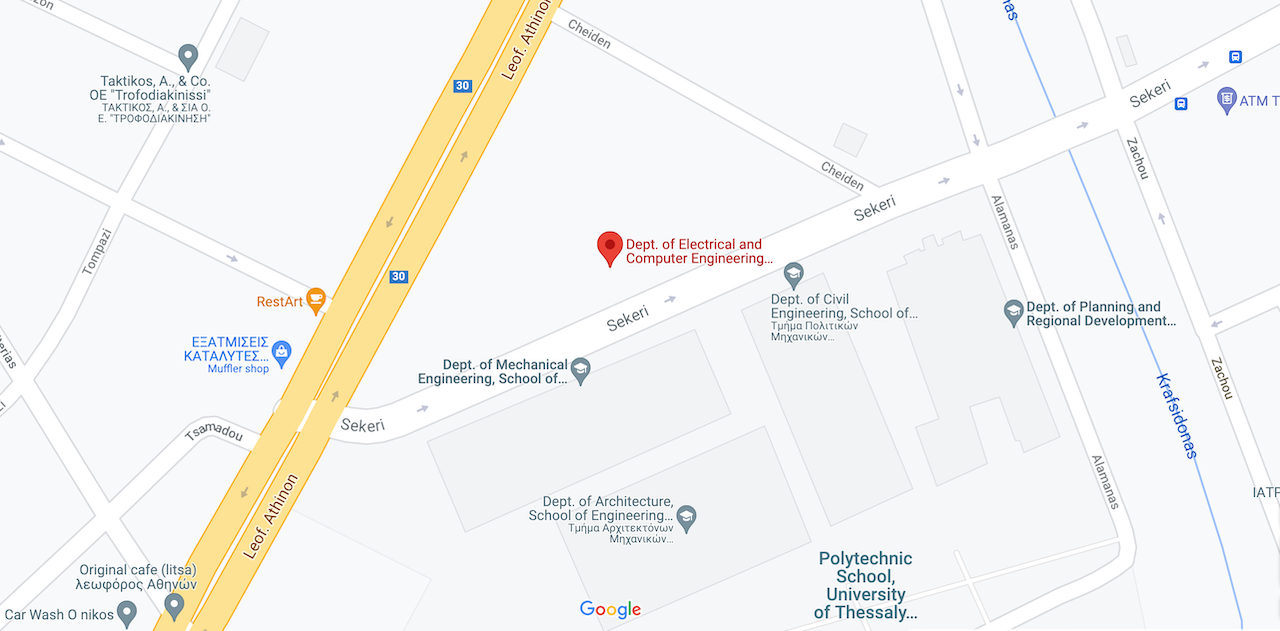
      • Sekeri – Cheiden Str
        Pedion Areos, ECE Building
        383 34 Volos – Greece
      Tel.+30 24210 74967, +30 24210 74934
      e-mailgece ΑΤ uth.gr
      PGS Tel.+30 24210 74933
      PGS e-mailpgsec ΑΤ uth.gr
      URLhttps://www.e-ce.uth.gr/contact-info/?lang=en
  • Login
ECE498 Dependable Computing Systems

ECE498 Dependable Computing Systems

Home » Studies » Undergraduate Studies » Undergraduate Courses » ECE498 Dependable Computing Systems
Subject AreaApplications and Foundations of Computer Science
SemesterSemester 8 – Spring
TypeElective
Teaching MethodTutoring
Teaching Hours4
ECTS6
Prerequisites
  • ECE119 Digital Design
  • ECE219 Computer Organization & Design
Recommended Courses
  • ECE318 Operating Systems
  • ECE327 Digital Systems VLSI
  • ECE333 Digital Systems Lab
Course Director

Georgios KarakonstantisGeorgios Karakonstantis, Associate Professor
E-mail: gkarakon@uth.gr

  • Description
  • Learning Outcomes

– Sources and Type of failures
– Evaluation metrics and evaluation methods
– Error modeling approaches
– Techniques for error detection
– Fault tolerant mechanisms in processors
– Fault tolerant mechanisms in memories
– Error mitigation mechanisms at circuit and architecture layer
– Mechanisms for addressing failures at the software
– Cross layer error resilient approaches

The course aims at the development of knowledge and skills for the design of dependable computing systems such that they operate efficiently under various operating conditions. After the successful completion of the course, participants will be able to:

• Understand the challenges related to the design of computing systems that operate under conditions that increase the failure probability and endanger the reliable operation.
• Explain the various sources of potential failures and their impact on processors, memories and the software.
• Apply techniques at various layers (with an emphasis at circuit and micro-architecture) for addressing potential failures.
• Understand and evaluate the impact of failures and the error mitigation mechanisms on the performance, power and/or area of the computing system.
• Implement and evaluate error mitigation mechanisms.

e-Yπηρεσίες

Contact Info

  • Sekeri – Cheiden Str, Pedion Areos, Volos
  • +30 24210 74967
  • +30 24210 74934
  • Email: gece@uth.gr

Announcements

  • Academic News

Find us

  • Facebook
  • Twitter
  • Youtube
  • Linkedin
© Copyright 2026 Department of Electrical and Computer Engineering
We use cookies to ensure that we give you the best experience on our website.